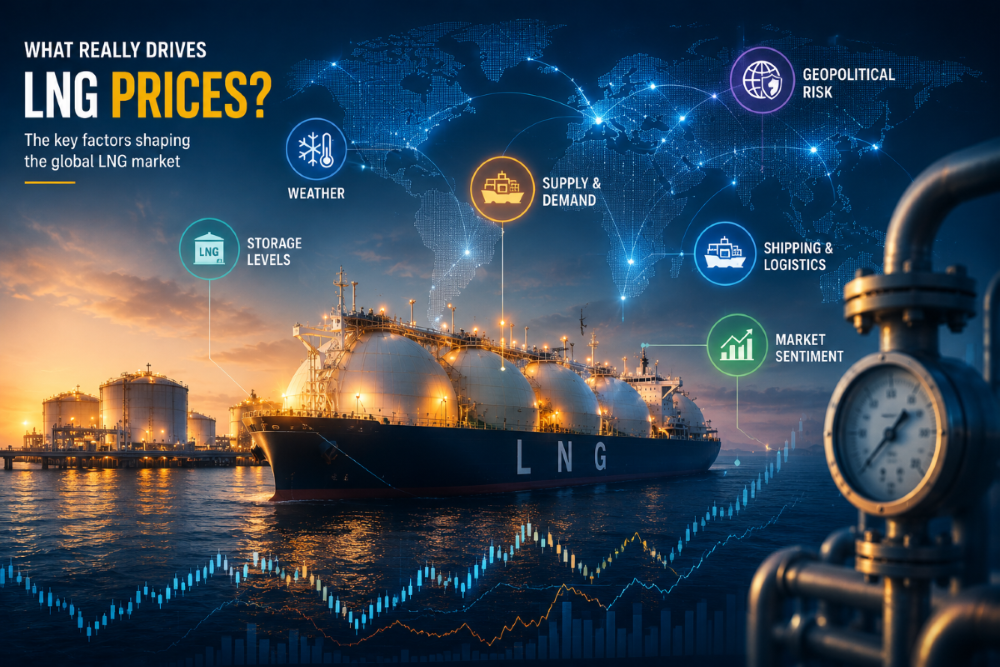
The factors behind LNG price movements are often more complex than most market participants realize.
When LNG prices suddenly surge, the explanation often seems obvious.
A geopolitical crisis.
A cold winter.
A supply disruption.
An unexpected increase in demand.
Yet anyone who has spent time analyzing LNG markets knows that price movements are rarely driven by a single event.
In reality, LNG prices are shaped by a constantly evolving combination of supply, demand, infrastructure, weather, storage levels, shipping constraints, and market psychology.
Understanding these drivers is becoming increasingly important as LNG continues to play a central role in global energy security.
Whether you're an energy professional, trader, investor, analyst, or simply interested in how global energy markets function, understanding what truly drives LNG prices provides valuable insight into the broader energy landscape.
Why LNG Matters More Than Ever
Liquefied Natural Gas (LNG) has transformed the global energy market.
Unlike pipeline gas, LNG can be transported across oceans, allowing natural gas to flow from exporting countries such as the United States, Qatar, and Australia to consuming regions across Europe and Asia.
This flexibility has created a truly global market.
Today, events occurring thousands of miles apart can rapidly influence LNG prices around the world.
A production outage in one region can affect energy costs in another.
A shipping disruption can impact supply availability across multiple continents.
As LNG becomes increasingly interconnected with global energy systems, price discovery has become significantly more complex.
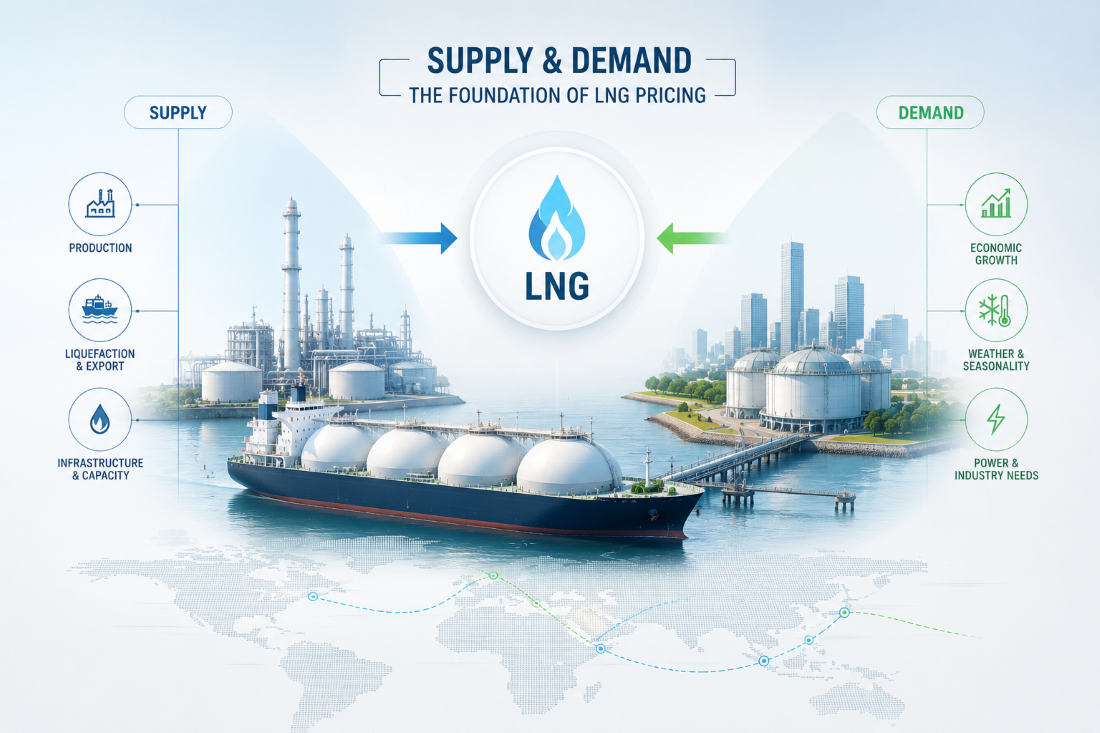
Supply and Demand: The Foundation of LNG Pricing
Like any commodity, LNG prices are ultimately driven by supply and demand.
However, LNG markets have several unique characteristics.
Supply growth requires massive capital investments.
Export terminals, liquefaction plants, shipping fleets, and import infrastructure often take years to develop.
This means supply cannot always respond quickly to changes in demand.
At the same time, demand can shift rapidly.
Industrial consumption, power generation requirements, weather conditions, and economic growth all influence LNG demand patterns.
When demand increases faster than supply can adjust, prices typically rise.
When supply outpaces demand, prices tend to soften.
But this is only the beginning of the story.
European Gas Storage: One of the Most Important LNG Indicators
One of the most overlooked drivers of LNG prices is gas storage.
Storage levels act as a buffer between supply and demand.
When inventories are high, markets generally feel comfortable.
When storage levels are low, markets become increasingly sensitive to disruptions.
This is particularly important in Europe.
European storage facilities help balance seasonal demand swings and provide protection during periods of supply stress.
Low storage levels entering winter often increase competition for LNG cargoes.
Higher storage levels typically reduce urgency in the market.
This is one reason why many traders closely monitor European storage data alongside LNG prices.
For those interested in tracking storage conditions, EnergyRiskIQ provides regularly updated European storage data and analysis through its gas storage intelligence resources.
Weather Remains a Powerful Market Driver
Weather continues to be one of the most important short-term drivers of LNG demand.
Cold winters increase heating demand.
Hot summers increase electricity demand for cooling.
Both scenarios can significantly impact natural gas consumption.
Weather forecasts can therefore move LNG markets long before temperatures actually change.
A colder-than-expected winter outlook may increase buying activity weeks in advance.
Similarly, expectations of mild weather can reduce demand projections and pressure prices lower.
This forward-looking behavior is one reason energy markets can sometimes appear disconnected from current conditions.
Markets are constantly attempting to price future expectations.
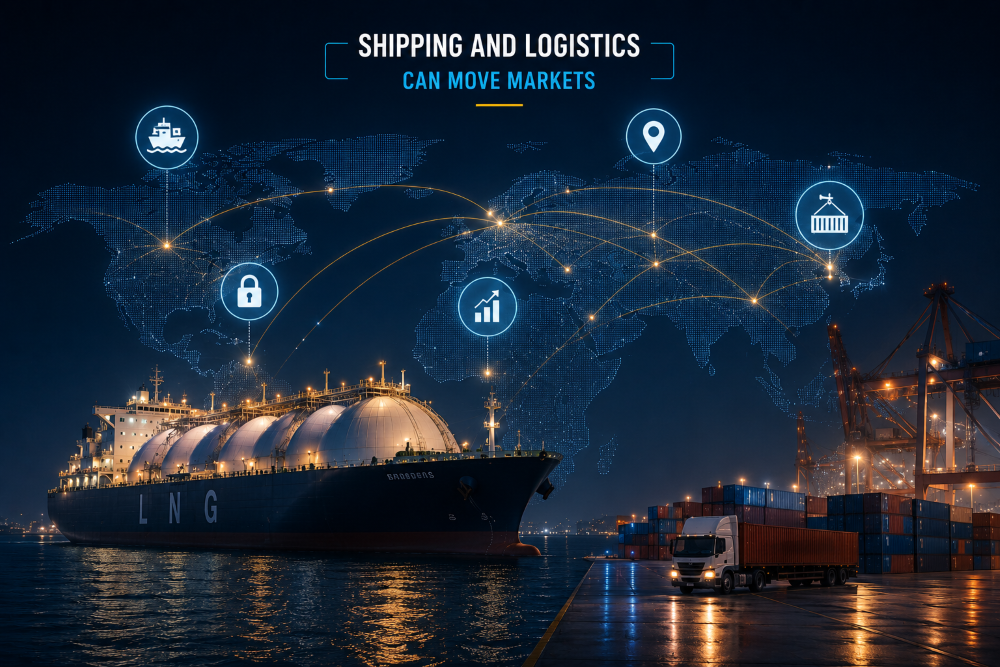
Shipping and Logistics Can Move Markets
Unlike pipeline gas, LNG relies on global transportation networks.
This makes shipping a critical component of price formation.
Several factors influence LNG logistics:
- Vessel availability
- Freight rates
- Canal congestion
- Maritime security risks
- Port capacity constraints
When shipping conditions deteriorate, the effective cost of delivering LNG rises.
This can influence regional pricing and alter trade flows.
In some cases, shipping disruptions have created temporary shortages even when global LNG supply remained adequate.
For traders and analysts, monitoring logistics can provide valuable insight into future market behavior.
Geopolitical Risk Often Changes Everything
Few markets are as sensitive to geopolitical developments as LNG.
Energy infrastructure, export routes, sanctions, trade policies, and regional conflicts can all influence market expectations.
Importantly, markets often react to perceived risk before physical disruptions occur.
If traders believe supply may become threatened, prices can rise even if actual deliveries remain unchanged.
This is where risk intelligence becomes particularly valuable.
Understanding changing geopolitical conditions can help explain why markets move before the underlying fundamentals visibly change.
At EnergyRiskIQ, much of our research focuses on identifying these evolving risk conditions before they become major market narratives.
Why LNG Traders Watch More Than LNG
One common misconception is that LNG prices move independently.
In reality, LNG is deeply connected to broader energy markets.
Professional market participants frequently monitor:
- TTF Natural Gas
- JKM LNG benchmark pricing
- Brent crude oil
- Global energy risk conditions
- Storage trends
- Supply-demand balances
Each provides clues about market direction.
For example, movements in European natural gas markets can influence LNG import demand.
Oil market developments can affect long-term LNG contract economics.
Risk indicators can help explain shifts in market sentiment.
This interconnected view often provides a clearer picture than focusing on LNG prices alone.
The Future of LNG Pricing
The LNG market is becoming increasingly sophisticated.
As global trade expands and energy systems become more interconnected, price movements are likely to become even more influenced by multiple overlapping factors.
The most successful market participants will not simply monitor prices.
They will monitor the drivers behind those prices.
Supply.
Demand.
Storage.
Shipping.
Weather.
Risk.
Together, these forces shape the global LNG market every day.
Understanding them provides a significant advantage in interpreting market behavior.
Final Thoughts
When people ask what drives LNG prices, they often expect a simple answer.
The reality is more complex.
LNG prices are the result of countless decisions being made across the global energy system.
Some of the most important drivers are visible.
Others operate beneath the surface.
The more closely you monitor supply-demand dynamics, storage levels, shipping conditions, weather forecasts, and emerging risks, the better equipped you become to understand where the market may move next.
And in today's energy markets, understanding why prices move is often more valuable than simply knowing that they moved.
Continue Exploring LNG Market Intelligence
If you want to dive deeper into LNG market dynamics, consider exploring:
- LNG supply and demand trends
- European gas storage developments
- JKM LNG benchmark pricing
- TTF natural gas markets
- Global energy risk conditions
These indicators often provide valuable context that simple price charts cannot.